
High school and college years
| Type of chapter | No. |
|---|---|
| Main | 156 issues |
| Bonus | 65 issues |
| Total | 221 issues |
- First of all, please note that, unlike Story Mode, Guide Mode contains NO spoilers.
- There will be two types of chapters: “main” and “bonus”. On one hand, main chapters contain what I consider essential to know Spider-Man’s story. On the other hand, bonus chapters include additional content that, while not strictly necessary, can further enrich the experience. To help you tell them apart, I will start with the main chapters and clearly specify whenever a chapter is a Bonus.
- In the “Reading Guide” table, the main comic series is highlighted in yellow, while any series different from the main one is in light blue (even if they are strongly connected).
- In the same table, some series feature an asterisk at the beginning, which means you can click on it to read important details for your reading.
- Images are surrounded by a green frame if the chapters are truly great, yellow if they are just good, orange if they are average, and red if they are bad.
- Guides in Spider-Hub are designed to let you read comics comfortably without the need to constantly switch series. Therefore, if a comic book turns out to be unnecessary to understand a series, it will be placed at the end of the chapter guide.
Enjoy your reading! B)
Chapter 1: High school
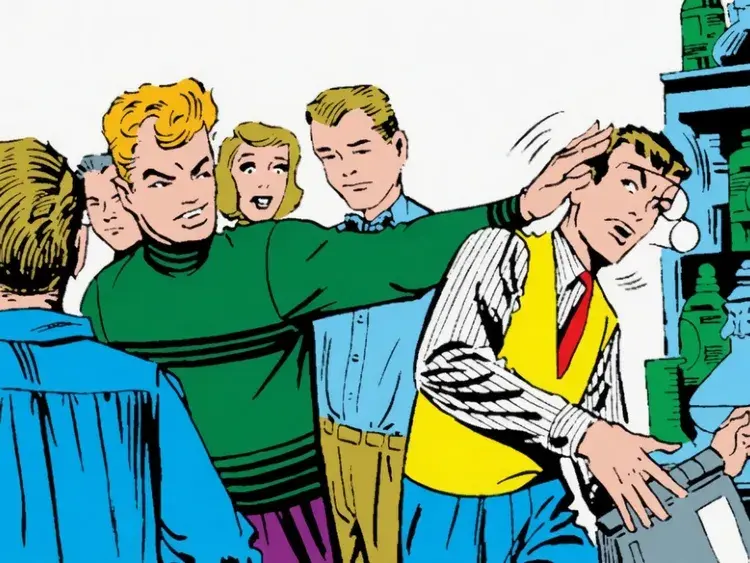
The phenomenon started here. In the sixties, superheroes were practically depicted as gods or perfect human beings, but the dynamic duo of Steve Ditko and Stan Lee completely shattered the status quo by introducing Peter Parker, a nerdy kid with everyday problems. While Spider-Man faces off against his most iconic rogues’ gallery for the FIRST TIME—from the Green Goblin, Doctor Octopus, Sandman, Vulture, Lizard, Electro, Mysterio, and Kraven, all the way to the Sinister Six—Peter Parker is dealing with a whole different set of problems: he has to worry about helping his elderly aunt pay the rent, overcoming his shyness to talk to girls at Midtown High, enduring a hostile work environment at the Daily Bugle where his boss openly loathes Spider-Man, and taking endless flak from his peers for being a nerd, among other things.
For Batman fans, it’s enough to say that this era of the web-slinger is the equivalent of Batman: Year One.
Reading guide
Steve Ditko
- Amazing Fantasy #15 (1962)
- Amazing Spider-Man #1-30 (1963)
- Amazing Spider-Man Annual #1-2 (1964)
Chapter 2: College, Gwen, and Harry
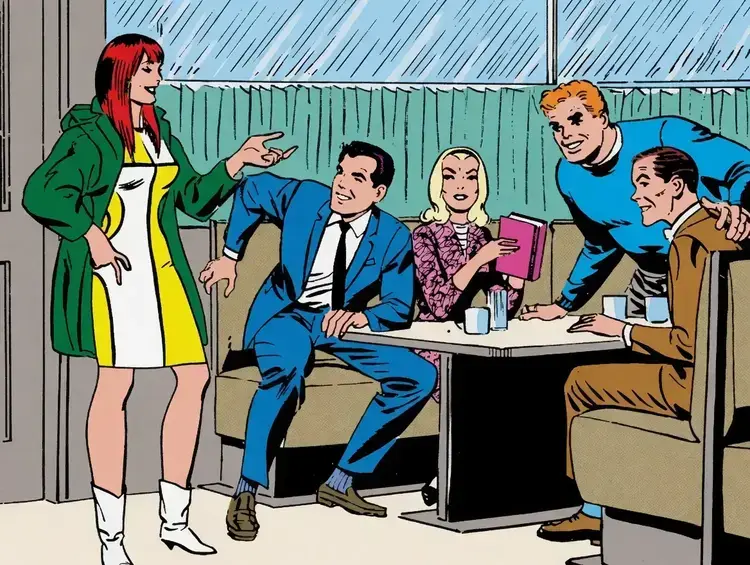
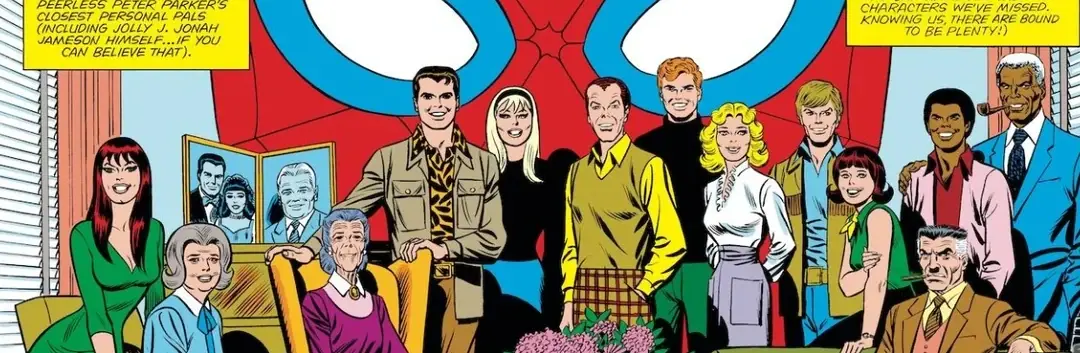
Welcome to what I consider the golden age of Spider-Man’s life, which kicks off right after his high school graduation—a bit of a departure from modern movies and animated series that tend to fixate on his teenage years. On campus, Peter finally makes lifelong friends, and in fact, one of them shares his intelligence and nerdiness (I’ll let you guess who is who): Harry Osborn and Gwen Stacy. On the other hand, thanks to Aunt May, Peter finally meets Mary Jane Watson, the most beautiful and vibrant girl in Forest Hills.
As if that weren’t enough, the rivalry between the Green Goblin and Spider-Man is defined in one of the most iconic battles ever, which finally exposes the villain’s true identity. And since we’re in the college era, it was time to tackle heavier themes, like Harry and his drug addiction.
This is also where Peter walks away from his vigilante lifestyle to pursue a normal life in “Spider-Man No More”, and in that very same storyline, he goes up for the first time against the crime lord of New York, known in the underworld as the Kingpin.
What excites me most about this era is that it finally showcases a more mature, experienced Peter Parker with a fresh social circle, which will surely be adapted in one way or another in the upcoming movie Spider-Man: Brand New Day (which, at the time of writing this, I haven’t seen yet).
Reading guide
Steve Ditko & John Romita
- Amazing Spider-Man #31-87 (1963)
* Spetacular Spider-Man #2 (1968)
* Amazing Spider-Man #88-109 (1963)
Roy Thomas steps in as the official writer after Stan Lee’s temporary departure in issue one hundred, and I’m going to be honest: I don’t particularly like Roy’s stories. They reference sixties pop culture way too much, and he also tries to recreate popular monster hits of the era across different Spider-Man narratives.
Nonetheless, Roy didn’t last long since Stan Lee returned just a few issues later.
- Amazing Spider-Man Annual #3-5 (1964)
John Romita
* Amazing Spider-Man #110-120 (1963)
110 is actually a comic written by Stan Lee and John Romita. However, I place it in the Gerry Conway era because Stan Lee finished his run right in the middle of a story arc.
Chapter 3: Goblin aftermath
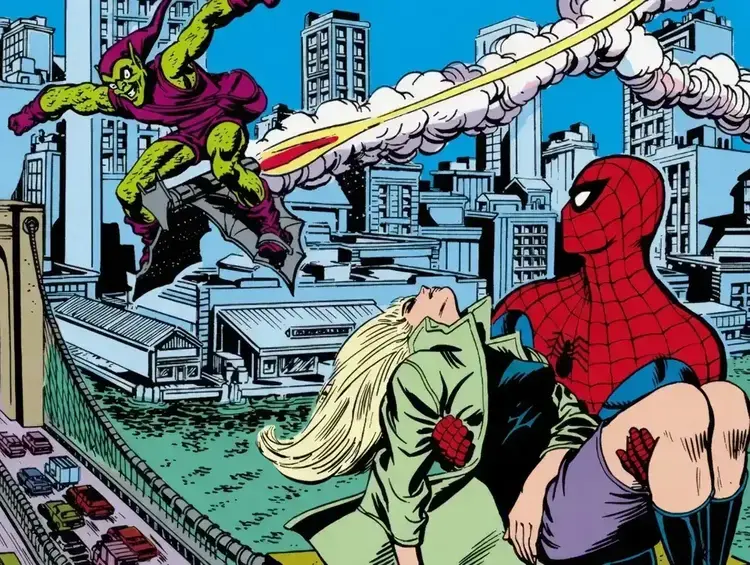
The Bronze Age of comics has arrived, an era notorious for being far more mature and darker than its predecessor, the Silver Age. I remember the Conway era vividly because he started killing off a lot of supervillains in rather tragic ways, and also because he introduced probably the most tragic character of all: the Punisher, along with—as oxymoronic as it sounds—the Spider-Mobile.
So, if the battle against the Green Goblin in the previous chapter was iconic, this one arguably tops it by a mile. But I think it’s wiser to talk, once and for all, about a second green character named… the Jackal. Co-created by Gerry Conway and Ross Andru, he’s a character who will undoubtedly cause an uproar for 90s writers, and I highly recommend staying away from the internet if you don’t want to accidentally spoil his secret identity, because trust me when I say it’s the person you least expect.
Reading guide
Gil Kane & Ross Andru
- Amazing Spider-Man #121-137 (1963)
Chapter 4: The Original Clone Saga
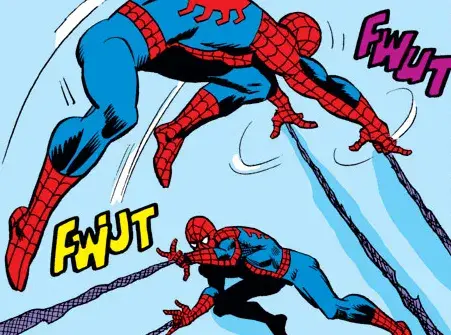
If you’re a Spider-Man fan, you’ve probably heard someone talk about the Clone Saga, and you most likely know it’s touted as the ultimate jumping-on point for the character. So forget what I said about the Stan Lee era being the best place to start, because it’s actually the Clone Saga from start to finish…
Just kidding. The Clone Saga is widely considered one of the worst places to start reading Spider-Man because it was an absolute trainwreck, all thanks to the editorial team at the time. And there are actually two Clone Sagas. This is the original one, which is quite short compared to the 90s Clone Saga, and it also holds a much better reputation. (Though personally, I also actually enjoyed the 90s one).
In the 70s Clone Saga, also known as the original Clone Saga, Peter encounters two clones created by the Jackal, who are just as confused about what’s going on as Peter is. In fact, one of the clones is based on a real person Peter deeply admired and who tragically died because of him, so the sheer shock of seeing this person back from the dead is incredibly real.
Reading guide
Ross Andru
- Amazing Spider-Man #138-149 (1963)
Chapter 1 of 1: High School revisited
By now, we all know Norman Osborn is the Green Goblin. Likewise, any veteran fan knows exactly how the Green Goblin’s arc ended in the Gerry Conway era (pretty epic, to say the least). But not many know what the Green Goblin was up to while Peter was still in high school. Sure, he was plotting to become the crime lord of New York and forming alliances with villains like the Crime Master, but we were missing a bit more of the story that wasn’t told until now. In fact, many of the villains featured in this series are being manipulated or are unknowingly acting according to Osborn’s will, and as expected, the volume wraps up with the Green Goblin.
On the academic side, Peter’s classmates from Midtown High who only made a brief appearance or a simple cameo in Amazing Fantasy #15 or The Amazing Spider-Man are back, and the story dives deeper into their personalities and… tragedies, because not everyone gets a happy ending.
Speaking of tragedies, I had to bring up the bat-boy. The bat-boy is a kid suffering from an affliction that has turned him into a monster, and though he only appears for three issues, his arc is so moving yet bleak that I couldn’t leave it out.
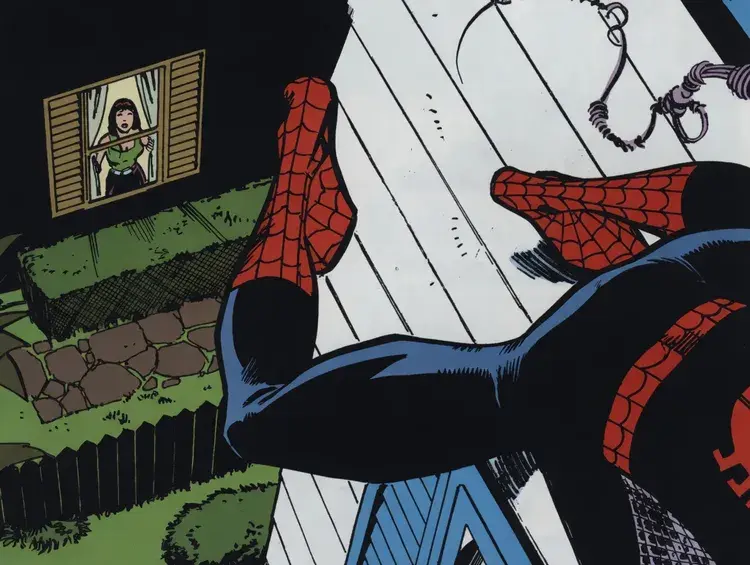
One more thing about MJ: before you start reading, you should know that in the special issue where she appears (#16), a major revelation drops that completely alters her relationship with Peter. Personally, it doesn’t matter if you discover it here or during the Hobgoblin era, which is where it was originally revealed in publication order; in fact, reading it here might even enrich your experience of The Amazing Spider-Man, but ultimately, the choice is yours.
Reading guide
Pat Olliffe
- Amazing Fantasy #16-18 (1995)
- Untold Tales of Spider-Man #1-25 (1995)
- Untold Tales of Spider-Man Annual 1996
- Untold Tales of Spider-Man Annual 1997
- Amazing Spider-Man Annual 1997
Chapter 1: Spider-Man and his amazing team-ups
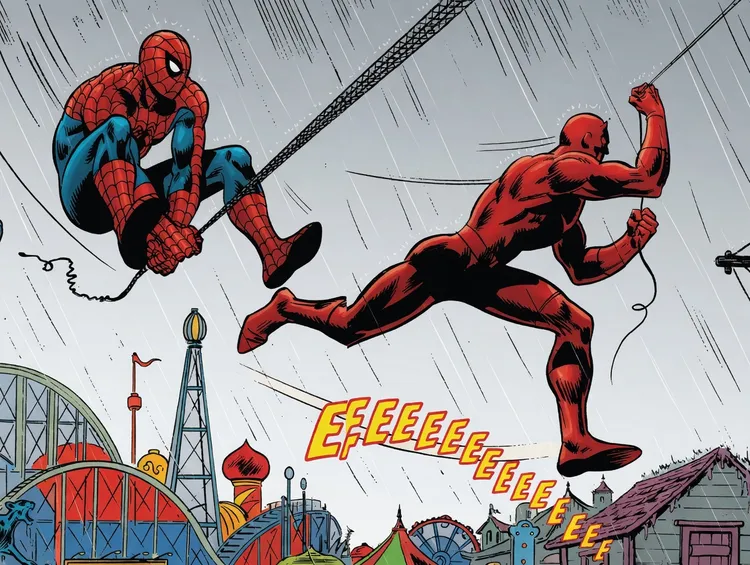
A Spider-Man reading guide isn’t truly complete without Marvel Team-Up; at least that’s what hardcore fans say. My take? You can completely skip it and you won’t miss a beat. While almost every story in this series features Spider-Man due to him being the most popular character at Marvel, those stories still feel… superfluous and superficial. I might be slightly mistaken, but I recall the formula being identical time and time again: the heroes would meet, get beaten, the villain would monologue about their plans, and then the heroes would strike back and win; at least that’s how it went for nearly every comic in this chapter.
But the biggest issue for me is how the heroes’ personal lives are pushed aside just to wrap up the story in a single issue. It’s like taking a cake, cutting it down the middle, and tossing out the best part. Spider-Man without Peter Parker just isn’t Spider-Man. For these two reasons, if you compare Amazing Spider-Man to Marvel Team-Up, you notice a sharp dip in quality.
I’m grateful, then, that my opinion shifts a bit after this particular chapter of Marvel Team-Up…
Reading guide
Ross Andru, Gil Kane, & Jim Mooney
- Marvel Team-Up #1-12 (1972)
Gil Kane, Ross Andru, Sal Buscema, & Jim Mooney
- Marvel Team-Up #13-17, #19-25, #27 (1972)
Jim Mooney & Sal Buscema
- Marvel Team-Up #28, #30-31, #33-34, #36-37 (1972)
Chapter 2: Spider-Man and his spectacular team-ups
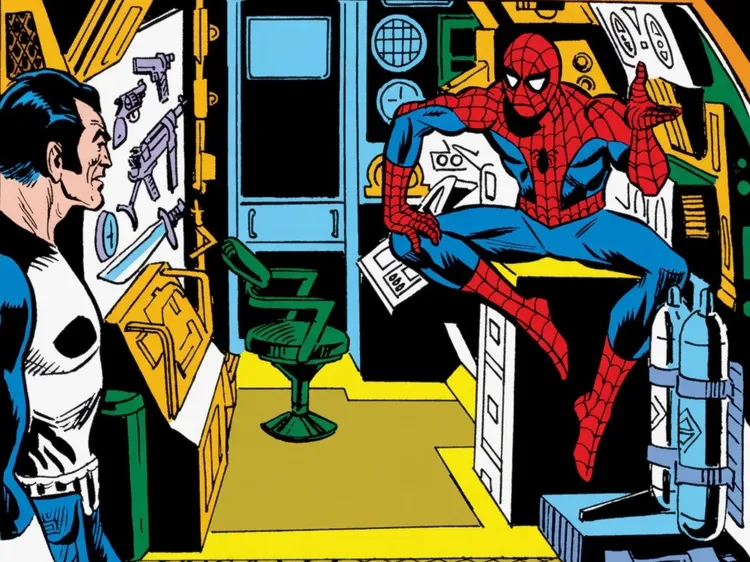
Giant-Size Spider-Man is a different beast altogether compared to Marvel Team-Up. I don’t know if it’s because they only ended up publishing 6 issues in total (it was originally meant to be a regular series until it proved too expensive to produce), but having double the pages gave them more room to develop the plot. Plus, they brought in characters that caught my eye, like the Punisher and Doc Savage (the last one actually predates both Batman and Superman), among others.
Granted, every now and then they still fall back on that very familiar formula where the heroes fight each other first before teaming up to take down the actual villain, but that doesn’t change things much since Giant-Size Spider-Man remains a series with its own distinct merits.
And yes, there is a spectacular story where Spider-Man and the Punisher team up to stop the bad guys. I recommend it one hundred percent.
Reading guide
Gil Kane & Ross Andru
- Giant-Size Super-Heroes #1 (1974)
- Giant-Size Spider-Man #1-5 (1974)
I ignore the first issue because it was decanonized due to poor sales (the comic was an attempt at a larger, more expensive, and premium format that people didn’t like back then); luckily, the story was later picked up by Gerry Conway to canonize it in his run, so you won’t miss out anything by skipping the first issue of Spectacular.